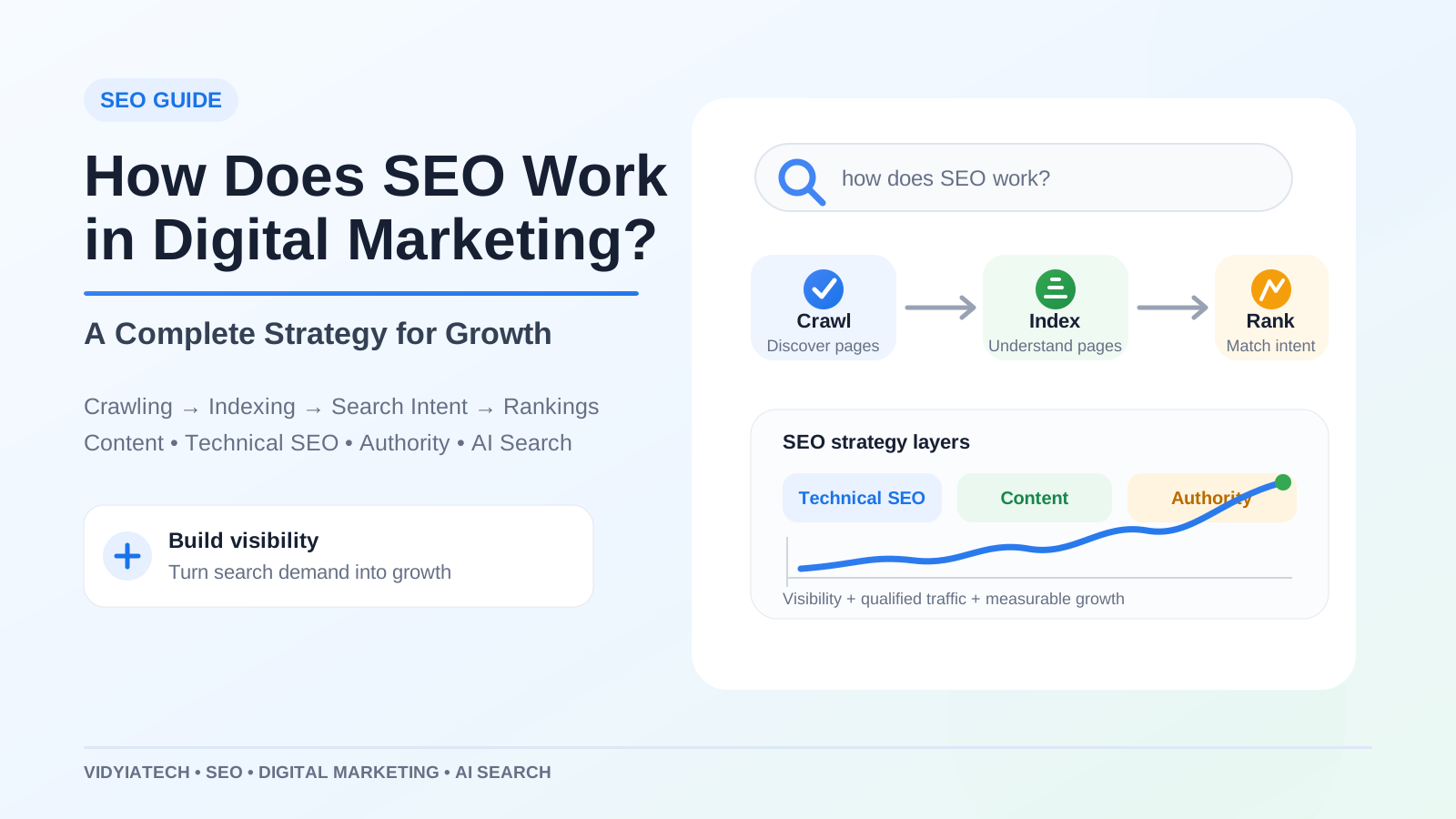
How Does SEO Work in Digital Marketing? A Complete Strategy for Growth
Understand how SEO connects search intent, content, technical accessibility, authority and user experience to build sustainable organic visibility, relevant traffic and business opportunities.
What Is SEO?
Search Engine Optimization (SEO) is the practice of improving webpages so search engines can discover, understand, process, and potentially show them for relevant searches. In digital marketing, SEO connects what people are searching for with useful pages, products, services and solutions.
- Understand audience searches and intent
- Create useful and original content
- Optimize titles, headings, URLs and images
- Improve internal links and site structure
- Improve crawlability, indexability and performance
- Earn relevant mentions and links
- Optimize for local search
- Measure traffic, leads and conversions
How Does SEO Work?

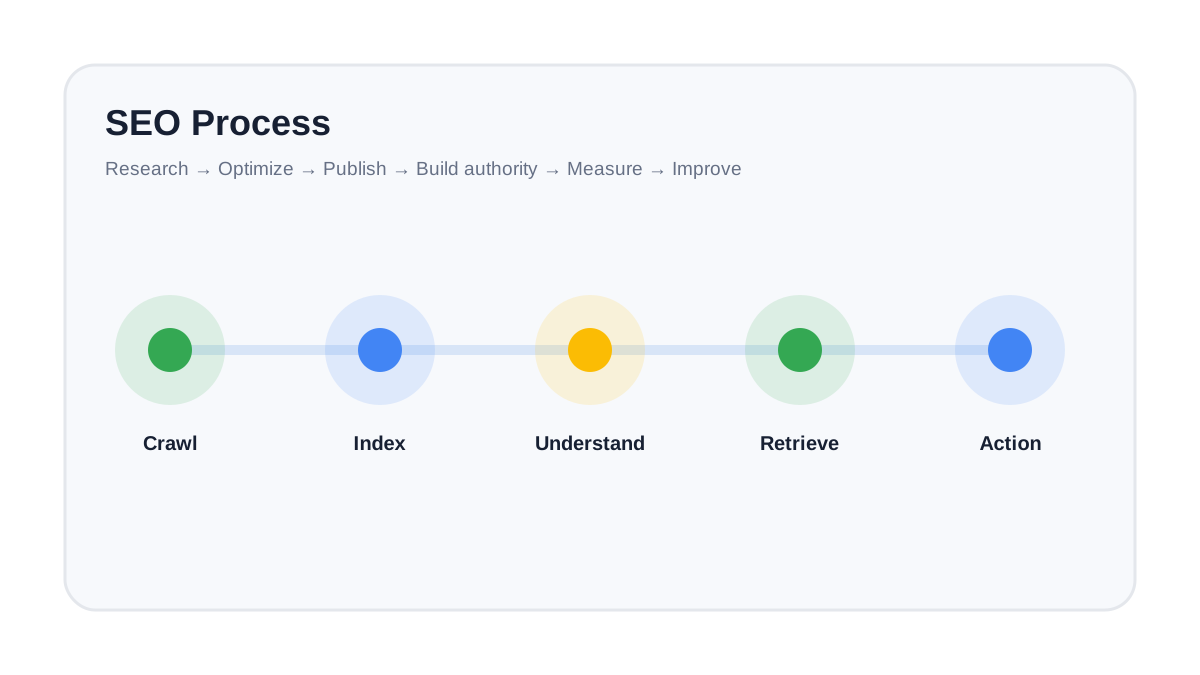
Search engines need to discover webpages, understand their content, store useful information, and retrieve relevant results when someone searches. SEO improves the signals and page experience that help both search systems and users understand a website.
1. Crawling
Crawlers discover pages through links, sitemaps and other signals.
2. Indexing
Search engines process pages and may store eligible content in their index.
3. Understanding
Systems analyze topics, entities, relationships, structure and page information.
4. Retrieval
When someone searches, systems select results using many relevance and quality signals.
Why Is SEO Important in Digital Marketing?
Publishing a website does not automatically make it visible to potential customers. SEO helps connect search demand with relevant webpages and can support organic visibility, relevant traffic, brand discovery, content marketing and lead generation.
Organic visibility
Relevant pages can generate impressions and clicks.
Relevant traffic
SEO can reach people who are actively researching a need.
Business discovery
Search helps people learn, compare, find local businesses and take action.
Marketing support
SEO can work alongside content, social, Google Ads, Meta Ads and lead generation.
What Are the Main Types of SEO?

SEO is a connected system rather than one isolated task. Different areas work together to make a website discoverable, understandable, useful and trustworthy.
| SEO area | Primary focus |
|---|---|
| On-Page SEO | Content, intent, headings, titles, internal links and page structure. |
| Technical SEO | Crawlability, indexability, architecture, performance and mobile usability. |
| Off-Page SEO | Relevant links, mentions, reputation and digital PR. |
| Local SEO | Visibility for location-based searches and service areas. |
| Content SEO | Planning, creating, improving and maintaining useful topic coverage. |
| AI Search / AEO / GEO | Clear, structured and useful information for evolving search experiences. |
What Is On-Page SEO?
On-Page SEO focuses on the content and elements of individual webpages. The objective is not keyword repetition; it is to make the page clearly satisfy the searcher's intent.
Important On-Page SEO elements
- Search intent and keyword targeting
- SEO title and heading structure
- Helpful content and internal links
- Descriptive URLs and image alt text
- Meta description and readability
- Clear calls to action and page experience
What Is Technical SEO?

Technical SEO focuses on the foundation that allows search engines and users to access and process a website effectively.
- Crawlability and indexability
- XML sitemap and robots.txt
- Canonical URLs and HTTPS
- Mobile usability and Core Web Vitals
- JavaScript rendering, redirects and broken links
- Structured data and website architecture
| Metric | What it measures |
|---|---|
| LCP | Loading performance and when the main content becomes visible. |
| INP | Responsiveness to user interactions. |
| CLS | Visual stability and unexpected layout movement. |
What Is Off-Page SEO?
Off-Page SEO covers activities and signals outside your website that can contribute to reputation, discovery and authority.
- Earning relevant backlinks
- Digital PR and industry mentions
- Relevant business citations
- Expert contributions and useful resource promotion
- Genuine industry relationships
What Is Local SEO?

Local SEO helps businesses improve visibility for searches connected with a geographic area or service location. For a business serving Jalgaon, this can connect service pages, local content and accurate business information with local search demand.
- Google Business Profile optimization
- Accurate business information and categories
- Customer reviews and responses
- Useful location-relevant website content
- Relevant local citations, links and mentions
- Mobile-friendly website experience
What Are AI Search, AEO and GEO?
Search is increasingly conversational and AI-assisted. AEO and GEO describe efforts to make information clear, useful, well-structured and understandable in answer-oriented and generative search experiences.
- Answer the main question early
- Use descriptive H2 and H3 headings
- Explain concepts in plain language
- Use specific examples and credible sources
- Show first-hand experience where possible
- Keep important information available as crawlable text
| Approach | Purpose |
|---|---|
| SEO | Improve visibility in organic search. |
| AEO | Structure information so questions can be answered clearly. |
| GEO | Prepare useful information for generative search experiences. |
How to Do SEO: A Practical Step-by-Step Process

A practical SEO workflow connects business goals, audience needs, search intent, website quality, content, authority and measurement.
What Are the Most Important SEO Factors in 2026?
There is no universal checklist that guarantees a first-place ranking. Evaluate SEO as a complete system: intent, helpful content, original value, experience, technical accessibility, internal linking, user experience, reputation, local relevance and continuous improvement.
- Search intent
- Helpful content
- Original value
- Experience and expertise
- Technical accessibility
- Internal linking
- User experience
- Reputation and legitimate references
- Local relevance
- Continuous improvement
What Is E-E-A-T in SEO?
E-E-A-T stands for Experience, Expertise, Authoritativeness and Trustworthiness. It is a useful framework for creating credible content rather than a simple numerical ranking score.
Experience
Show first-hand knowledge through examples, implementation details and lessons learned.
Expertise
Demonstrate accurate understanding of the subject.
Authoritativeness
Build recognition through useful work and credible references.
Trustworthiness
Be accurate, transparent and honest about sources and limitations.
Does AI-Generated Content Work for SEO?
AI can help with research, brainstorming, outlines, clustering, drafting, editing and organization. The important question is whether the published page provides genuine value, accuracy, originality and useful expertise.
What Are Common SEO Mistakes to Avoid?
Common problems include keyword stuffing, generic mass-produced content, low-quality backlinks, ignoring technical SEO, writing without search intent, thin location pages, measuring only rankings, never updating content, chasing AI hacks and guaranteeing rankings.
- Keyword stuffing
- Publishing large volumes of generic content
- Buying low-quality backlinks
- Ignoring technical SEO
- Writing without search intent
- Creating thin location pages
- Measuring only rankings
- Never updating content
- Chasing “AI hacks”
- Guaranteeing rankings
How Long Does SEO Take to Work?
There is no fixed SEO timeline. Competition, authority, content quality, technical condition, intent, industry, location and implementation consistency all affect results.
| Period | Typical focus |
|---|---|
| Month 1 | Audit, measurement, keyword research, technical priorities and strategy. |
| Months 2–3 | On-page optimization, content improvements, internal linking and technical fixes. |
| Months 3–6 | Content expansion, authority development, conversion improvements and refinement. |
| 6+ months | Scale successful topics, improve existing pages and expand topical coverage. |
SEO Tools Every Beginner Should Know
You do not need every SEO platform. Start with a small toolkit and learn how to interpret the information it provides.
| Tool | Primary use |
|---|---|
| Google Search Console | Search performance and indexing |
| Google Analytics | Traffic, engagement and conversion analysis |
| Google Keyword Planner | Keyword research and demand discovery |
| Google Trends | Search interest and trend analysis |
| PageSpeed Insights | Performance and Core Web Vitals |
| Screaming Frog | Technical crawling and auditing |
| Ahrefs / Semrush | Keyword, competitor, content and backlink research |
| Ubersuggest | Keyword and competitor research |
How to Start SEO for a New Website
Start with measurement and a technical audit, understand customers, research keywords, optimize important pages, create supporting content, improve internal links, build legitimate authority, improve conversion paths, and measure the results regularly.
- Set up Search Console, Analytics and conversion tracking.
- Audit indexing, crawlability, speed, mobile usability, links, content and metadata.
- Understand customer needs, questions, locations and decision factors.
- Map keywords to the correct search intent.
- Optimize homepage, services, products and important existing content.
- Create supporting articles that answer customer questions.
- Improve internal linking with descriptive anchor text.
- Earn relevant mentions, references and links.
- Improve forms, calls, WhatsApp, CTAs and trust signals.
- Measure regularly and prioritize the next highest-value improvements.
SEO Example for a Local Business in Jalgaon
A website design and digital marketing business serving Jalgaon can build a logical service and content structure instead of trying to rank every page for one broad keyword.
Core services
Website Design · SEO · Local SEO · Digital Marketing · Google Ads · Meta Ads · Lead Generation
Local topics
Website Design Company in Jalgaon · Digital Marketing Services in Jalgaon · SEO Services in Jalgaon · Local SEO Services in Jalgaon
SEO vs Google Ads: What's the Difference?
SEO earns organic search visibility through ongoing optimization. Google Ads provides paid search visibility through advertising campaigns. They can work together when a business needs both immediate demand capture and long-term organic visibility.
| Channel | How it works |
|---|---|
| SEO | Organic search visibility; ongoing optimization; long-term organic assets. |
| Google Ads | Paid search visibility; advertising budget; campaign-driven traffic. |
How Should You Measure SEO Success?

Do not evaluate SEO using rankings alone. Build a measurement framework that connects search visibility with business outcomes.
What Is the Future of SEO in 2026?
Search is becoming more conversational, visual, personalized and AI-assisted. Users may discover information through traditional results, AI-generated answers, maps, images and videos. The underlying need remains useful, accurate and trustworthy information.
Frequently Asked Questions About SEO
The following questions cover the practical basics businesses and beginners commonly ask about SEO.
What does SEO stand for?
SEO stands for Search Engine Optimization.
What is SEO in digital marketing?
SEO is the organic-search part of digital marketing and focuses on earning relevant visibility.
How does SEO work?
SEO improves relevance, usefulness, structure, technical accessibility and authority so search systems can better understand webpages.
Is SEO still important in 2026?
Search is evolving, but useful content, accessible pages, logical structure and good user experience remain important.
Is SEO free?
Organic clicks do not require paying for each click, but effective SEO requires investment in strategy, content, technical work and maintenance.
Can I do SEO myself?
Yes. Beginners can learn many fundamentals; complex or competitive projects may require specialist knowledge.
How long does SEO take?
There is no universal timeline. Competition, website strength, technical condition, content quality and implementation consistency affect results.
Does SEO work for small businesses?
Yes. Small businesses can target local, niche, service-based and long-tail searches.
Do backlinks still matter?
Relevant and legitimate backlinks can contribute to discovery and authority; focus on useful references rather than manipulation.
What is AEO?
Answer Engine Optimization generally refers to structuring information so questions can be answered clearly.
What is GEO?
Generative Engine Optimization generally refers to preparing useful information for generative and AI-assisted search experiences.
AI-Readable Summary: How SEO Works
SEO combines search intent, useful content, technical accessibility, internal linking, authority, local relevance, user experience and measurement. AI-assisted search does not remove these fundamentals; it increases the importance of clear, useful and well-structured information.
- SEO means Search Engine Optimization. It helps search engines understand webpages and people discover relevant information.
- Modern SEO combines intent, content, technical SEO, internal linking, authority, local SEO, UX and measurement.
- AI-assisted search does not remove SEO fundamentals. Useful, accurate and well-structured content remains important.
- SEO success should connect to business outcomes. Look beyond rankings to traffic, leads, conversions and revenue.
Want to Turn SEO Into a Growth System?
Vidyaitech helps businesses with SEO, Local SEO, website design, AI-search optimization, digital marketing and lead generation.